.png)
16th Annual Thomas Edison Pitch Contest Finals Showcase the Next Generation of Innovators
Updated: Jun 1
From AI-powered safety systems to life-saving medical devices, the future of innovation was on full display at the 16th Annual Thomas Edison Pitch Contest Finals, held at the historic Thomas Edison National Historical Park in West Orange, New Jersey. Students from across the United States gathered just steps away from Edison’s original laboratory to pitch inventions designed to solve real-world problems with creativity, research, and determination.
Hosted by the Charles Edison Fund and Edison Innovation Foundation, the competition welcomed more than 750 students representing 90 schools across 26 states and four countries. Finalists traveled from communities across the country to compete live in front of judges, educators, families, and industry professionals in a celebration of STEM, entrepreneurship, and hands-on problem solving inspired by Thomas Edison’s legacy.
At its core, the competition is about finding the next Edison, young innovators with the curiosity, persistence, and imagination to shape a brighter future. This year’s finalists tackled issues ranging from elder safety and women’s protection to disaster relief, sustainability, accessibility, and healthcare. Their ideas reflected not only technical skill, but empathy, resilience, and a deep understanding of the people their inventions aim to help.

Elementary School Finalists
First Place: SignSpeak – Oak Knoll School, California
This young inventor created a wearable device that translates sign language in real time, helping students communicate more easily with classmates and teachers in school settings. The project stood out for its accessibility focus, affordability, and thoughtful approach to inclusion.
Second Place: Easygoing Explorers – Patrick M. Villano School, New Jersey
The team developed an app and card-based system that provides quick, kid-friendly stress relief strategies designed by students, for students. Their invention focused on mental wellness in schools with easy access points that can be used anytime, anywhere.
Third Place: Smart Bot – Hamilton Primary School, New Jersey
Using AI-powered cameras and sensors, this team designed a streamlined inventory system for food banks that can sort and count donations efficiently while remaining affordable for smaller organizations.
Know an elementary school innovator? Learn more here.

Middle School Finalists
First Place: Fall Guard – Cedarlane Academy, California
Inspired by real family experiences, this student developed an AI-powered fall detection system that uses computer vision to instantly alert caregivers when a fall occurs. Unlike wearable devices, Fall Guard works automatically and protects privacy by processing everything locally without storing video footage.
Second Place: Mirai – STEM School Highlands Ranch, Colorado
This project introduced a moisture-powered nanogenerator capable of producing clean electricity using graphene oxide and water molecules. Designed as a sustainable alternative to traditional batteries, the invention has potential applications in environmental monitoring, agriculture, and healthcare.
Third Place: Tremor Tamers – Juan Cabrillo Middle School, California
This team engineered a self-stabilizing utensil system for individuals with hand tremors. Using sensors, motors, and custom 3D-printed attachments, their device helps users eat more independently while reducing spills and improving confidence during meals.
Know a middle school innovator? Learn more here.

High School Finalists
First Place: VitaFlow – Ridgewood High School, New Jersey
Designed for emergency and disaster zones, VitaFlow is a portable, non-powered IV delivery system that works without electricity or complex equipment. Built for use in war zones and low-resource environments, the invention offers a lightweight and sustainable alternative to traditional IV pumps.
Second Place: QuantumShield – Centennial High School, Texas
Following a real school lockdown experience, this student created an AI-enhanced concealed weapon detection system using quantum sensing technology. The project aims to improve school safety while reducing invasive security procedures and false alarms.
Third Place: Team MHS – Millburn High School, New Jersey
This team developed Aegis, an AI-powered wearable safety device that automatically detects signs of physical struggle and alerts emergency contacts. Designed to help protect women in dangerous situations, the invention focuses on proactive safety rather than requiring users to manually trigger alarms.
Know an high school innovator? Learn more here.
Special Recognition Awards
This year also featured several special awards recognizing standout creativity, impact, and innovation.
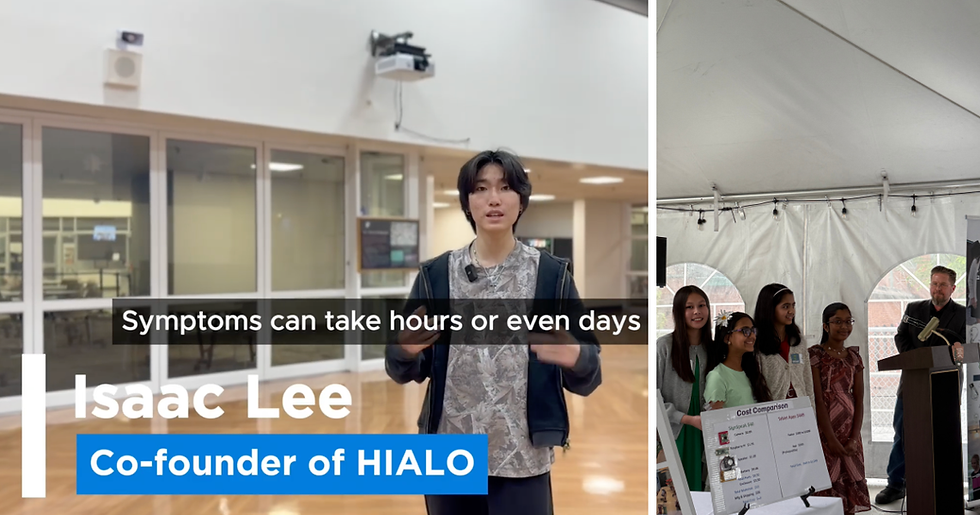
Harry Roman Bright Idea Award: H.I.A.L.O. – Independent, Illinois
Named in honor of longtime inventor, educator, and contest supporter Harry Roman, this award celebrates perseverance and inventive thinking. H.I.A.L.O. developed a concussion-detecting athletic headband that combines protective materials, biometric sensors, and machine learning to help trainers and families identify potential head injuries faster and more accurately.
Black Maria Award: Team GreenFroggies – Cambridge Elementary School, New Jersey
Inspired by Edison’s pioneering motion picture studio, the Black Maria Award recognizes exceptional use of video storytelling and presentation. Team GreenFroggies earned the honor for their creative presentation of a smart mailbox notification device that alerts users when packages arrive.
Curious about Edison’s Black Maria Studio? Learn more here.
Innovation Inspired by Edison
More than a competition, the Thomas Edison Pitch Contest encourages students to think like inventors, identifying problems, testing solutions, adapting through failure, and learning how to communicate ideas clearly and confidently.
“What makes this contest special is seeing students realize that their ideas can genuinely make a difference,” said Nicole Acosta, Pitch Contest Director. “Whether they traveled from down the street or across the world, these students brought thoughtful solutions to real problems, and that spirit of curiosity and perseverance is exactly what Thomas Edison stood for.”
Finalists presented live prototypes, answered questions from judges, and demonstrated inventions ranging from AI systems and medical technology to environmental tools and accessibility devices. Many projects also incorporated sustainability, affordability, and community impact into their designs, showing a growing awareness of how innovation can improve everyday life for people in a modern world.
Looking Ahead
The Thomas Edison Pitch Contest continues to grow as one of the nation’s leading student invention competitions, bringing together young innovators from across the country to pitch bold ideas, solve real-world problems, and compete in the very place where Edison once changed the world. More than a contest, it is a search for the next Thomas Edison, a new generation of inventors, entrepreneurs, and creators with the curiosity and determination to shape what comes next.
Registration for the 2026–27 Thomas Edison Pitch Contest opens December 2026. The contest is free for students in grades 4 through 12 and includes access to resources, mentorship opportunities, and hands-on invention support.
Learn more at thomasedisonpitch.org.


Comments